Calculate each compatible group separately, then add the group weights. Keep packaging and unresolved inputs outside the lumber subtotal.
- 01Group like pieces
- 02Calculate each line
- 03Add explicit tare
Group by the inputs that matter
Create one line for pieces with the same actual dimensions and density basis. Separate a changed thickness, species, condition or profile rather than averaging everything at the start. Use descriptions that can be matched to bundle tags or the count sheet. A line called assorted boards is difficult to verify later.
Count the physical pieces represented by the estimate. If quantities are provisional, label them that way. Do not add a spare-material percentage without distinguishing it from stock already counted.
Worked example: two lines and one pallet
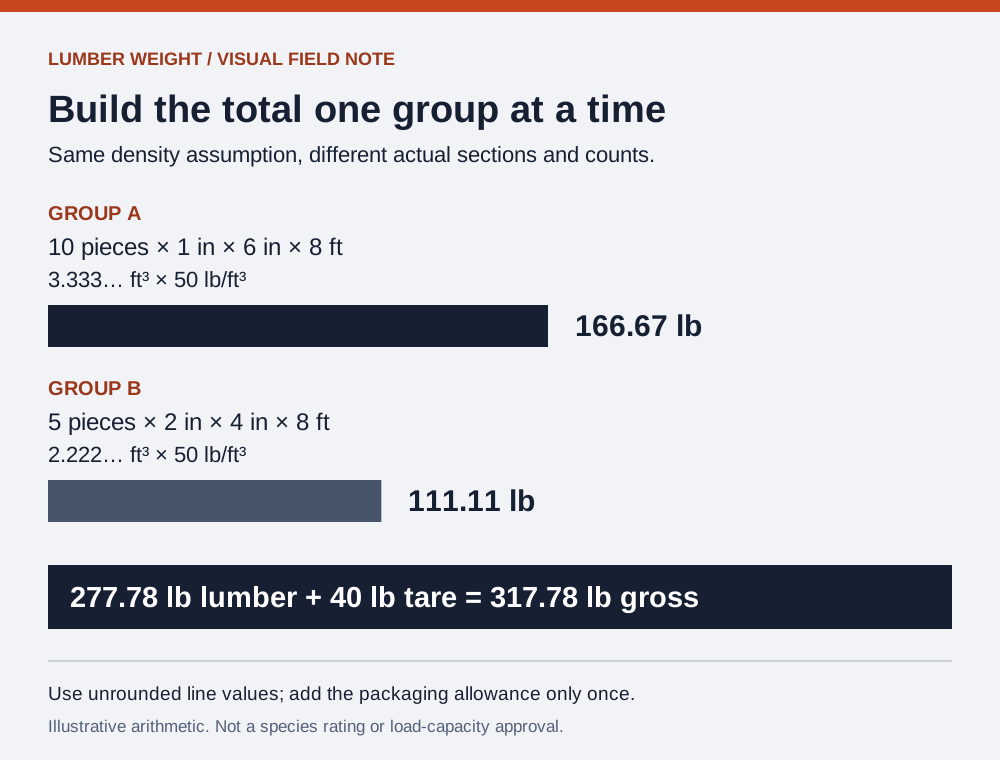
Illustrative line A contains ten 1 × 6 inch × 8 ft boards at an assumed 50 lb/ft³: 166.67 lb. Line B contains five 2 × 4 inch × 8 ft pieces at the same assumed density: 111.11 lb. The lumber subtotal is 277.78 lb. Adding a separately assumed 40 lb pallet produces a 317.78 lb estimated gross figure.
These selected values demonstrate arithmetic only. The pallet entry is not a standard pallet weight, and the density is not a species property. Change each input to the actual evidence for the planned bundle.
Reconcile before handing over
Check whether each label corresponds to a real group and whether the package count matches the shipping plan. A single shipment can contain more than one bundle, each with its own packaging. Do not count shared tare on every line or omit packaging because it is not lumber.
Export the schedule with the source assumptions attached. If a supplier changes the length mix, replace the relevant line and review the total. This site estimates mass; it does not create a cut plan, select lifting equipment or approve vehicle capacity.
VISUAL FIELD NOTE · WORKED EXAMPLE
A mixed bundle, explained visually
A worked quantity schedule keeps each group visible before packaging is added.
Read the numbers and text explanation
- Group A
- 10 × 1 in × 6 in × 8 ft at an assumed 50 lb/ft³ → 166.67 lb
- Group B
- 5 × 2 in × 4 in × 8 ft at an assumed 50 lb/ft³ → 111.11 lb
- Lumber subtotal
- 277.78 lb, calculated using unrounded line values
- Packaging and gross
- Assumed 40 lb tare, added once → 317.78 lb estimated gross
Evidence & scope
This field note provides an original planning workflow and illustrative arithmetic. It does not publish measured product properties or prescribe operating limits.
Read the editorial policy