A usable density is more than a number. Keep its units, material identity, moisture basis and source with the calculation.
- 01Identify the material
- 02Document the condition
- 03Attach the source
Start with the decision the estimate supports
Comparing wood species for a project and documenting the weight of a finished lumber order have different evidence needs. For an early scenario, a clearly labeled assumed density can show which inputs dominate the result. For an actual shipment, ask the supplier for product-specific information or an appropriate weighing. Do not let the precision of the calculator imply that the source material was measured.
Write down the product description first: species identification if known, solid or engineered construction, treatment, profile and condition. A familiar trade name may cover material from more than one botanical species. An average entry in a general reference should not be relabeled as the weight of a particular board pack.
Read the units and condition together
Density relates mass to volume. If the weight and volume refer to different moisture conditions, the resulting figure may answer a different question from the one on your worksheet. The USDA handbook explains the relationship between wood moisture and physical properties. Use that context to ask for the density basis, not to invent a correction factor.
Store the document title, date, units and relevant condition beside the input. A screenshot without the table heading may omit the very information needed to interpret its figures. If only specific gravity is available, use the separate guide before treating it as a density.
Worked scenario: two plausible inputs
Illustrative example: the same 5-cubic-foot quantity at assumed densities of 40 and 50 lb/ft³ produces 200 and 250 lb. The arithmetic is valid in both cases. Choosing the input remains the unresolved decision. These are hypothetical values, not species ratings.
Send the supplier both the quantity basis and the question you need answered: which documented figure applies to the proposed material in its shipping condition? Preserve the original assumption in the record if it is replaced. That history makes a revised estimate understandable without presenting the first figure as a mistake in multiplication.
VISUAL FIELD NOTE · WORKED EXAMPLE
Make density uncertainty visible
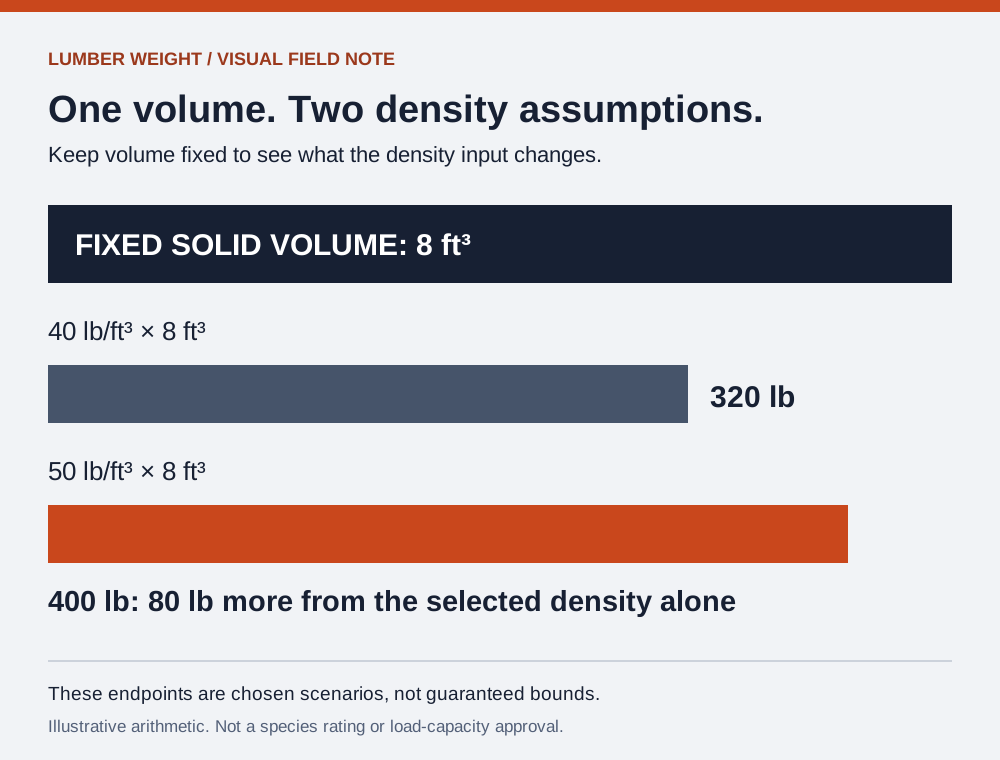
An input range changes the estimate even when every dimension and count stays the same.
Read the numbers and text explanation
- Fixed volume
- 8 ft³ of modeled solid lumber
- Lower selected density
- 40 lb/ft³ × 8 ft³ = 320 lb
- Higher selected density
- 50 lb/ft³ × 8 ft³ = 400 lb
- Scenario spread
- 80 lb, or 25% above the lower scenario
Evidence & scope
Wood–water relationships and physical properties. General reference, not a supplied-product weight certificate.